is a zero-trust technology that assumes all files are malicious. It "disarms" them by breaking them down into components, removing potential threats (like macros or scripts), and "reconstructing" a clean version. Key elements of a Deep CDR report include: Sanitization Summary : An overview of files processed and threats eliminated. Forensic Insights : Detailed JSON responses for security analysts to trace what was removed. File Transformation Details : Records of file type conversion (e.g., converting a potentially risky Excel file into a safe PDF). Layer Analysis : A breakdown of the "multi-layered pyramid" of complex files, showing how embedded objects were handled. 2. Deep Call Detail Record Analysis (Telecom) Call Detail Record (CDR) documents the specifics of telecommunications transactions. A "deep" report in this context involves advanced forensics or business intelligence. Components of a Deep Telecom Report: Call Flow Mapping : Visualizing the path of a call across different towers or network points. QoS Metrics : Technical performance data like Mean Opinion Score (MOS), jitter, and packet loss. Relationship Analysis : Using tools like the CDR Relationship Tool to find links between different callers. Geo-Location Data : Mapping calls to specific cell tower coordinates (LAC/Cell ID) to track movements. 3. Competency Demonstration Report (Australian Immigration) Deep CDR™ Technology - Deep Content Disarm & Reconstruction
Understanding CDR Format: A Comprehensive Guide In the world of computer-aided design (CAD), CorelDRAW, and data storage, the CDR format plays a vital role. CDR, which stands for CorelDRAW, is a proprietary file format used to store vector graphics, illustrations, and page layouts. In this article, we will delve into the details of the CDR format, its history, features, advantages, and limitations. We will also explore the various uses of CDR files, how to work with them, and the software compatible with this format. History of CDR Format The CDR format was introduced by Corel Corporation, a Canadian software company, in the late 1980s. The first version of CorelDRAW, a popular vector graphics editor, was released in 1989, and it used the CDR format to store its files. Since then, the CDR format has undergone several revisions, with new features and improvements added in each version. What is CDR Format? The CDR format is a vector graphics file format that stores data in a proprietary binary format. It is used to save illustrations, logos, icons, and other graphical elements created using CorelDRAW or other compatible software. CDR files contain a collection of curves, lines, and shapes that can be edited and manipulated using CorelDRAW or other software that supports the format. Features of CDR Format The CDR format offers several features that make it a popular choice among designers, artists, and data storage professionals. Some of the key features of CDR files include:
Vector graphics : CDR files store vector graphics data, which allows for scalable and high-resolution images. Proprietary format : The CDR format is owned by Corel Corporation, and its specifications are not publicly available. Binary format : CDR files are stored in a binary format, which makes them compact and efficient. Support for layers : CDR files support layers, which allow designers to organize and manage complex graphics. Compatibility with CorelDRAW : CDR files are native to CorelDRAW, which means they can be easily opened, edited, and saved using this software.
Advantages of CDR Format The CDR format offers several advantages, including: cdr format
High-quality graphics : CDR files store high-quality vector graphics data, which ensures that images remain crisp and clear even when scaled up or down. Compact file size : CDR files are typically compact and efficient, which makes them easy to store and transfer. Support for complex graphics : The CDR format supports complex graphics, including layers, curves, and shapes. Native compatibility with CorelDRAW : CDR files can be easily opened, edited, and saved using CorelDRAW, which makes it a popular choice among designers.
Limitations of CDR Format While the CDR format offers several advantages, it also has some limitations, including:
Proprietary format : The CDR format is owned by Corel Corporation, which means that its specifications are not publicly available. Limited compatibility : CDR files can be opened and edited using CorelDRAW and a few other software applications, but they may not be compatible with all software. Version compatibility issues : Different versions of CorelDRAW may not be compatible with each other, which can lead to version compatibility issues. is a zero-trust technology that assumes all files
Uses of CDR Files CDR files are widely used in various industries, including:
Graphic design : CDR files are used to create logos, icons, illustrations, and other graphical elements. Digital art : CDR files are used by digital artists to create complex graphics, including paintings and illustrations. Page layout : CDR files are used to create page layouts, including brochures, flyers, and posters. Data storage : CDR files are used to store data, including vector graphics, illustrations, and page layouts.
Software Compatible with CDR Format Several software applications are compatible with the CDR format, including: Forensic Insights : Detailed JSON responses for security
CorelDRAW : CorelDRAW is the native software application for CDR files, and it can open, edit, and save CDR files. Corel PaintShop Pro : Corel PaintShop Pro is a photo editing software that supports CDR files. Adobe Illustrator : Adobe Illustrator can import CDR files, but it may not support all features and effects. Inkscape : Inkscape is a free and open-source vector graphics editor that can import CDR files.
How to Work with CDR Files Working with CDR files requires CorelDRAW or other software that supports the format. Here are the steps to work with CDR files:
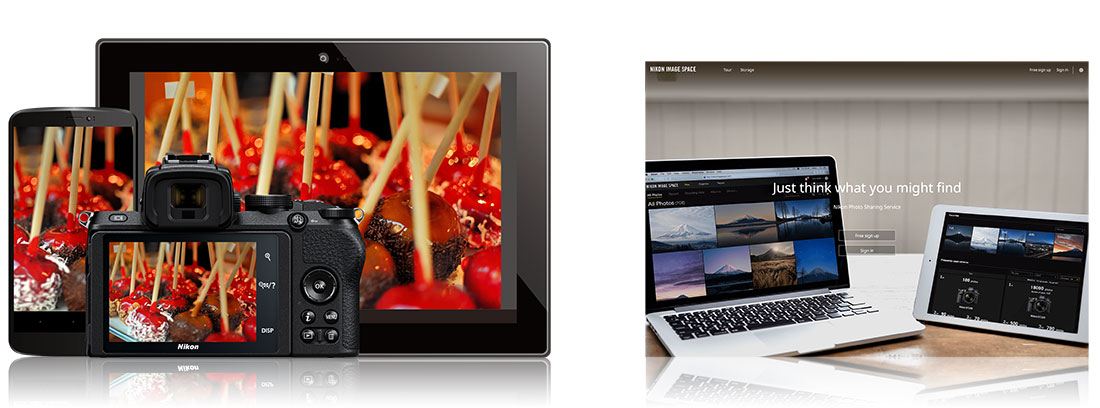
When connecting your Nikon camera and smart device after registering for your Nikon ID*, you can automatically upload taken images on NIKON IMAGE SPACE via the SnapBridge app. Additionally, thumbnail images (2 megapixels) can be saved in NIKON IMAGE SPACE without any limitation.
Original pictures and other large images can be saved up to 20 GB.
Sign up now and take full advantage of SnapBridge!
* If you are a member of NIKON IMAGE SPACE, you can use the same ID and password for your Nikon ID registration.
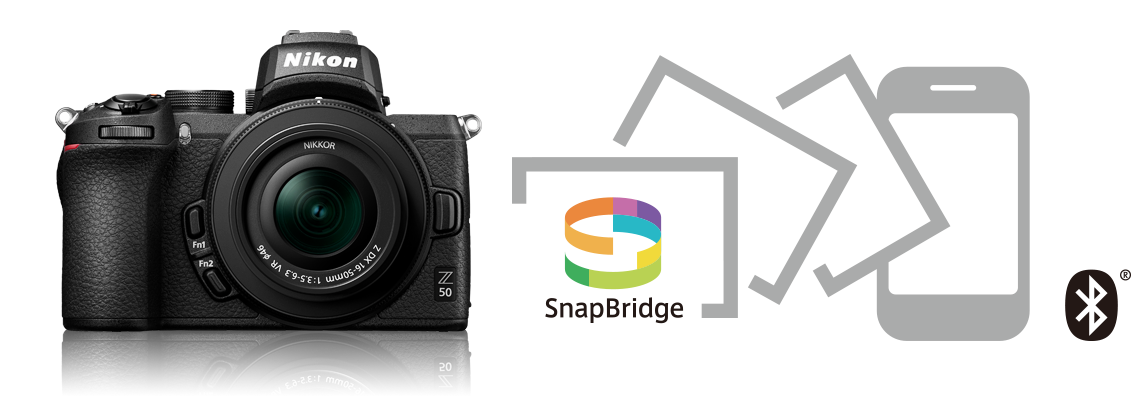
Take advantage of automatic picture transfer by downloading the app onto your compatible smart device now. The app connects your Nikon cameras with a compatible iPhone®, iPad®, iPod touch® or smart devices running on the Android™ operating system. The app is available free from the website (snapbridge.nikon.com), Apple App Store® and Google Play™.
Note:
●Mac, OS X, Apple®, App Store®, the Apple logos, iPhone®, iPad® and iPod touch® are trademarks of Apple Inc. registered in the U.S. and/or other countries.
IOS is a trademark or registered trademark of Cisco Systems, Inc., in the United States and/or other countries and is used under license.
●Android™ and Google Play™ are trademarks of Google Inc.