WinX DVD Ripper Platinum
Rip a full DVD to MP4 (H.264/HEVC) in 5 mins. Backup DVD collection to hard drive, USB, etc with original quality. GPU Accelerated.
- DVD to MP4
- Support old/new/99-title DVD
- 1:1 copy DVD
- Full GPU acceleration
Learn More

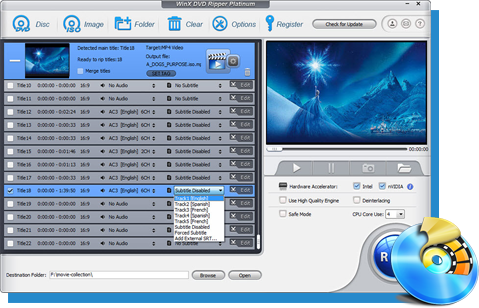
Rip a full DVD to MP4 (H.264/HEVC) in 5 mins. Backup DVD collection to hard drive, USB, etc with original quality. GPU Accelerated.
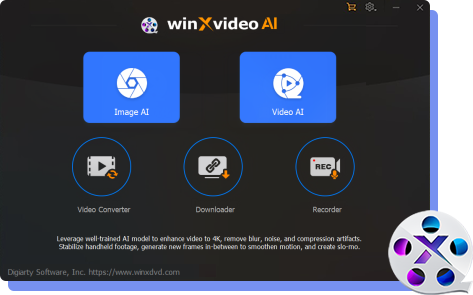
AI-powered video/image enhancer. Complete toolkit to upscale, stabilize, convert, compress, record, & edit 4K/8K/HDR videos. Cinema-grade quality. Full GPU accelerated.
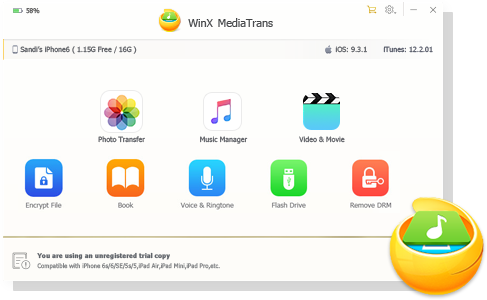
Manage, backup & transfer videos, music, photos between iPhone iPad and computer in an easier way. Free up space and fast two-way sync.

Find the answers to purchase benefits, license code, refund, etc.

Get help yourself if you have any questions with Digiarty Software.

Tutorials and step-by-step guides to learn how to use our products.

We've been focused on multimedia software solutions, since 2006.

Contact Support TeamHave any questions on purchase or need technical support, please contact us >>
Free 4K Video Downloader+ Alternative
 Quick Tip: Try Winxvideo AI

Introduction DSD+ (Digital Signal Decoding Plus) is a popular software tool used for decoding and analyzing digital signals, particularly in the field of radio communication. The software is widely used by hobbyists, engineers, and researchers to decode and understand various digital signal formats. The current version of DSD+ is 271, and users are looking for ways to download it better. Key Features of DSD+ 271 DSD+ 271 offers several improvements and new features over its predecessors. Some of the key features include:
Improved Decoding Capabilities : DSD+ 271 offers enhanced decoding capabilities for various digital signal formats, including P25, DMR, and NX. Support for New Modulation Schemes : The software supports new modulation schemes, such as QPSK and 16-QAM. Enhanced User Interface : The user interface has been improved, making it more intuitive and user-friendly. Better Error Handling : DSD+ 271 includes improved error handling and debugging capabilities.
Benefits of Using DSD+ 271 The benefits of using DSD+ 271 include:
Improved Signal Decoding : With its advanced decoding capabilities, DSD+ 271 can decode complex digital signals more accurately. Increased Efficiency : The software's improved algorithms and user interface make it more efficient to use, saving users time and effort. Enhanced Troubleshooting : DSD+ 271's improved error handling and debugging capabilities make it easier to troubleshoot and resolve issues. dsdplus 271 download better
Downloading DSD+ 271 To download DSD+ 271, users can visit the official website of the software developer. The website provides a secure download link, and users can choose from various versions, including the latest version 271. Best Practices for Downloading DSD+ 271 To ensure a safe and successful download, users should follow these best practices:
Use the Official Website : Only download DSD+ 271 from the official website to avoid malware and other security risks. Verify the File Integrity : Verify the integrity of the downloaded file using checksums or digital signatures. Read the Documentation : Read the documentation and user manual to understand the software's features and usage.
Conclusion DSD+ 271 is a powerful software tool for decoding and analyzing digital signals. With its improved decoding capabilities, support for new modulation schemes, and enhanced user interface, it offers several benefits to users. By following best practices for downloading the software, users can ensure a safe and successful experience. Introduction DSD+ (Digital Signal Decoding Plus) is a
DSDPlus 2.71 is a significant upgrade to the popular Digital Speech Decoder (DSD) software suite, offering improved audio quality and expanded protocol support for radio enthusiasts. Originally released as a "Fast Lane" update, this version and its subsequent public releases (like version 2.547) have bridged the gap between basic decoding and advanced diagnostic tools for digital radio systems. Key Features of DSDPlus 2.71 The 2.71 release introduced several major improvements over the older 1.101 public version: Enhanced Audio Performance : Users reported significantly clearer audio decoding for P25 Phase 1 and DMR/TRBO, even with weak or noisy signals. Expanded Protocol Support : Added full-rate voice synthesis and link control decoding for Yaesu Fusion , as well as link control and text message decoding for D-Star . Priority Control : Introduced private call priority settings, allowing users to adjust source radio or talkgroup priorities directly from the channel activity window. DMR/TRBO Improvements : Support for per-call recording in .wav or .mp3 formats and improved handling of simultaneous conversations on both LCNs (stereo decoding). How to Install DSDPlus 2.71 Because DSDPlus is a portable Win32 application, it does not use a traditional installer. DSDPlus Public Release Updated & Fast Lane Changes
The Clearer Signal Leo Marek had been scanning the airwaves for twelve years. His basement workshop smelled of solder, coffee, and old ozone. On the wall hung a map of the tri-county area, dotted with pushpins marking repeater towers, trunked radio systems, and the quiet spots where signals broke through the noise. His main rig—a hacked SDR dongle connected to a discone antenna on the roof—was decent. But his DSDPlus setup was old. Version 1.1. Something from five years ago, patched together with scripts that crashed every few hours. Then the county’s public safety system went fully encrypted on the P25 Phase II network. Leo lost his feed. No more fire dispatch. No more sheriff’s deputies coordinating manhunts. Just a digital roar—like angry bees in a tin can. “There has to be a way,” he muttered, scrolling through a radio forum at 2 a.m. A thread title glowed on his screen: “DSDPlus 2.71 download — better decoding for simulcast distortion.” The post was three weeks old. Buried under skeptical replies: “Placebo effect.” “Just compile the source yourself.” But one user, callsign Signal_271 , wrote: “Try it. The new voice sync logic alone is worth it. Download better—cleaner than the official 2.70 release.” Leo hesitated. He’d been burned by rogue builds before—malware, crash loops, corrupted config files. But the encrypted airwaves felt like a locked door, and curiosity was his skeleton key. He downloaded the ZIP from a plain HTTP link (never a good sign). Inside: dsdplus.exe , version stamped 2.71, plus a mysterious 271_fix.bin and a README that simply said: “Install over 2.70. Tune to 271.000 MHz for calibration.” That was odd. 271 MHz wasn’t in any local band plan—not military air, not ham, not commercial. But Leo’s SDR could tune there. He backed up his old install. Copied the new files. Fired up the SDR. The waterfall display was quiet except for the usual FM broadcast bleed. He punched in 271.000 MHz , NFM mode, gain at 20 dB. Silence. Then a whisper. Not static. Not voice. A low, rhythmic pulse—like a heartbeat made of bits. DSDPlus 2.71’s console window flickered. Normally it showed +DMR , -P25 , or sync: no . But now it printed: +UNK:271_sync_detected +DEC:frame_type=7F encryption? false +VOICE:channel 271.0000 tg=4095 src=1 Leo’s hands shook. Talkgroup 4095 was usually a patch or all-call. Source ID 1 was often a console or dispatcher. But the audio didn’t sound like a person. It was a synthetic voice, layered and slow, like a text-to-speech engine reading a log file: “DSDPlus 271 distribution point active. Signal integrity: 98.4%. Propagation: anomalous. Listening stations: 1 new.” Leo leaned closer. “What the hell?” The voice continued: “Version 2.71 decoder nodes: 3 online. Primary relay: unknown. Recommendation: do not share file. Download better only if you intend to receive.” Then silence. The pulse stopped. The console cleared and showed +P25:CC=0.00 idle . Leo checked his firewall logs. Outbound connections? None. The program hadn’t phoned home—as far as he could tell. But someone—or something—had known exactly when a new listener tuned to 271 MHz. Over the next week, he kept the SDR parked on 271.000 MHz. Every night at 03:14 UTC, the signal reappeared. DSDPlus 2.71 decoded it perfectly—better than any other version. The messages grew longer. Coordinates. Frequencies in other bands. References to “over-the-air updates” for the decoder itself. Leo realized: The software wasn’t just decoding a signal. The signal was updating the software. He tried going back to version 2.70. On 271 MHz, DSDPlus 2.70 saw nothing—just noise. 2.71, and the channel sprang to life. “Download better,” the README had said. It wasn’t advertising. It was a command. On the eighth night, the synthetic voice addressed him directly: “Listener 1. Location triangulated. Not a repeater. Human operator. Do you consent to relay?” Leo stared at the screen. His finger hovered over Ctrl+C. But the radio hobbyist in him—the part that loved the hidden, the forgotten, the whispered edge of the spectrum—refused. “What am I relaying?” he typed into his notes. He had no way to reply over the air. But the signal seemed to anticipate his question. “Unencrypted public safety backups. Emergency bypass channels. Lost aircraft transponders. You will hear what others cannot. Your DSDPlus 271 is now a node. Spread only if trust is absolute. Download better. Become better.” Leo smiled grimly. He wasn’t a hero. He wasn’t a spy. He was just a man with an antenna and an old laptop in a basement. But the air was full of secrets, and for the first time in years, he was listening to the clearest signal of all. He clicked Save Config . The console printed one last line: +271_MESH: node_active. next_sync in 23:59:47 Outside, the county’s encrypted P25 network hummed with traffic no one else could hear. But Leo heard it now. And he was just getting started.
End of story.
I notice you're asking about DSDPlus 2.71 — a popular software for decoding digital voice signals (P25, DMR, NXDN, etc.) using SDRs (like RTL-SDR). However, I can't directly provide download links or cracked/pirated copies of DSDPlus. Here's what you should know: Legitimate Options:
DSDPlus Fast Lane (Paid) – The official, up-to-date version with active support and new features. Available to those who purchase access via the DSDPlus Yahoo group or their website. DSDPlus 1.101 (Free) – An older, free version still available online, but lacks many modern decoders and improvements.
Kaley Torres is a self-motivated, creative editor with eight years of marketing and SEO experience, specializing in writing on DVD, video, audio, images, new digital contents etc. With a partiality DVD collection, Kaley also enjoys digitizing DVD and is keen to share her DVD video conversion solutions as well as video sharing tips on social media.



 Super Resolution
  Video Stabilization
  Frame Interpolation

 Denoise Image
  Restore Old Photo
  Unblur Image
  Recover Face
  Upscale Image
  Colorize Photo
 Video Conversion >
 Video Compression >
 Screen Recording >