





































This addon saves hours that usually are invested in manually creating sky, atmosphere and placing sun object and stars, and automates it within a single click.
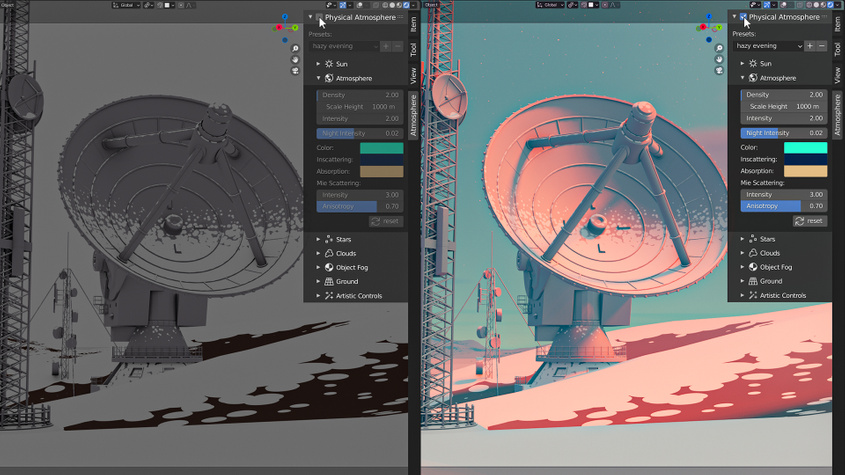
We have more than a decade of experience with atmosphere rendering techniques in computer graphics industry. Physical Starlight and Atmosphere addon is used in entertainment, film, automotive, aerospace and architectural visualisation industries.

Presets allow to store a snapshot of your customized atmosphere settings and return to it later or use already predefined presets provided by the addon.

We use a procedural method of calculating the atmosphere based on many tweakable parameters, so that sky color is not limited only to the Earth's atmosphere.

Works well in combination with Blender Sun Position addon. You can simulate any weather at any time.


"Physical Starlight and Atmosphere has been an invaluable tool for me in my personal/professional work and a huge missing link for lighting in Blender. It still feels like magic every time I use it, I can't recommend it highly enough!"

"Physical Starlight and Atmosphere has been an essential add-on for all of my environmental design projects. It gives me such incredibly flexibility and control over the look and feel of my renders. Lighting is key for any project, and this add-on always gives my work that extra edge."

"As a lighting artist, focusing on the overall mood of an image is super important. Physical Starlight and Atmosphere is based on reality, so I can spend all of my time iterating on the look without worrying about how to achieve it. "

"I love the tool. It has been my go-to since I picked it up a couple of months ago."

"My work life has become super easier since I started using Physical Starlight and Atmosphere, it cut down a lot of technical headache associated with setting up a believable lighting condition and gave me more time to concentrate on the creative part of my design process."
The Honda Jazz GK5 (2013–2022) requires regular maintenance—specifically 5,000–7,500 mile oil changes and 30,000-mile spark plug replacements—to sustain its 1.5L i-VTEC engine and address common electrical or sealing issues. Proper servicing, including CVT fluid changes, helps maximize the vehicle's lifespan, with professional services often costing upward of £241. Detailed common faults for the model can be reviewed at BreakerLink Blog . Honda Jazz GK5 Lap Times - LapMeta
For owners of the third-generation Honda Jazz (GK5) , produced between 2013 and 2022, the service manual is an essential technical resource for maintaining its 1.5L i-VTEC engine and distinctive "Magic Seat" utility. Core Coverage & Technical Depth A comprehensive service manual for the GK5 typically spans over 500 pages, providing significantly more detail than the standard owner's manual found in the glovebox. Key technical areas include:
The Honda Jazz GK5 service manual is an essential technical resource for owners of the third-generation (2014–2020) Honda Jazz/Fit. This manual provides a comprehensive roadmap for maintaining the vehicle's peak performance, covering everything from routine oil changes to complex mechanical repairs. Essential Maintenance Schedule for the GK5 Adhering to a strict service schedule is vital for preserving the Jazz GK5's resale value and minimizing mechanical breakdowns. Most experts recommend a full service every 12 months or 12,000 miles . Genuine Honda Jazz Oil Change Service Kit 2016-2019 ️ Genuine Honda 0W20 Oil – 4 Litres. Cox Motor Parts Honda Jazz Service - Kwik Fit
Here’s a comprehensive write-up regarding the Honda Jazz GK5 Service Manual , covering its importance, typical contents, where to find it, and usage tips. honda jazz gk5 service manual
Understanding the Honda Jazz GK5 Service Manual The Honda Jazz (known as the Honda Fit in many markets, including Japan and North America) GK5 represents the third generation of this popular subcompact hatchback, produced from approximately 2013 to 2020. The chassis code GK5 specifically denotes the 1.5-liter petrol engine variant (L15B engine) with front-wheel drive, which is the most common version worldwide. A service manual (often called a workshop manual) is the definitive, factory-authorized document designed for professional technicians and serious DIYers. Unlike the owner’s manual (which covers basic controls and maintenance schedules), the service manual provides exhaustive technical data, step-by-step repair procedures, wiring diagrams, torque specifications, and diagnostic workflows. Why You Need the GK5-Specific Manual While many procedures are similar across generations, the GK5 has unique features that require precise information:
Direct Injection L15B Engine: Requires specific procedures for fuel system service, valve adjustments, and carbon deposit cleaning. CVT (Continuously Variable Transmission): The Earth Dreams CVT has specific fluid types (HCF-2) and replacement protocols that differ from older CVTs. Electrical Architecture: More complex CAN bus systems and integrated ECU functions demand accurate wiring diagrams. Chassis & Suspension: The GK5 introduced a more rigid platform and revised suspension geometry; torque specs for these components are critical for safety and handling.
Typical Contents of the GK5 Service Manual A genuine or complete aftermarket manual will cover: Honda Jazz GK5 Lap Times - LapMeta For
General Information: Vehicle identification, lift points, fluid capacities, and specifications. Maintenance: Schedules, inspection procedures, and service resets (e.g., oil life reset). Engine (L15B): Compression checks, timing chain replacement, fuel injector service, cooling system bleeding. Transmission: CVT fluid drain/fill, clutch replacement (manual version), shift linkage adjustment. Brakes: Pad/rotor replacement, ABS sensor testing, parking brake adjustment. Suspension & Steering: Strut removal, ball joint inspection, electric power steering (EPS) calibration. HVAC: Heater core replacement, A/C refrigerant charging, blower motor diagnostics. Electrical: Full wiring diagrams (connector pinouts, ground locations, fuse box details), troubleshooting of warning lights (check engine, VSA, TPMS). Body: Panel gaps, trim removal, sunroof repair, door lock actuator replacement. Restraints (SRS): Airbag handling precautions, seat belt tensioner reset.
Where to Obtain the GK5 Service Manual
Honda Official Source (Recommended): Purchase via the Honda Service Express (HSX) website (U.S.) or your local Honda dealer’s parts department. This gives you access to the official, updated electronic version. Expect to pay per day, per month, or per model. Aftermarket Printed/Digital: Publishers like Haynes or Chilton offer less detailed but user-friendly manuals for the Honda Fit (2015-2020). Ensure the manual explicitly lists “Fit GK” or “Jazz GK” and the L15B engine. Online Forums & Communities: Enthusiast sites (FitFreak.net, JazzForum.com) sometimes host scanned copies or links to PDFs. Caution: These may be outdated, incomplete, or of dubious copyright legality. Third-Party DVD/Download (eBay/Amazon): Cheap but risky. Often poorly scanned, missing sections, or infected with malware. Not recommended for critical repairs. This manual provides a comprehensive roadmap for maintaining
How to Use the Manual Effectively
Start with the Index: Always look up your specific symptom, part name, or procedure code. Use Torque Specs Religiously: The GK5 uses aluminum components (engine block, transmission case) that strip easily if over-tightened. The manual lists every torque value. Follow Diagnostic Flowcharts: For electrical issues (e.g., “Check Engine Light P0171”), the manual provides step-by-step testing using a multimeter – don’t skip to part replacement. Check Special Tools: Some jobs (like CVT belt inspection or fuel line disconnection) require Honda-specific tools. The manual will list them – decide if a DIY alternative is safe. Update TSBs (Technical Service Bulletins): A genuine service manual access will include TSBs – known factory fixes for common GK5 issues (e.g., VTC actuator rattle on cold start, sticky door handles).